3 Things Business Leaders Should Understand About Storytelling
Your business may have a strong offer, an experienced team, and a clear plan. Customers still need to understand why any of it matters to them.
Storytelling helps connect what you do to a challenge your audience recognizes. For business leaders, it deserves a place in the conversation about growth, sales, and customer experience.
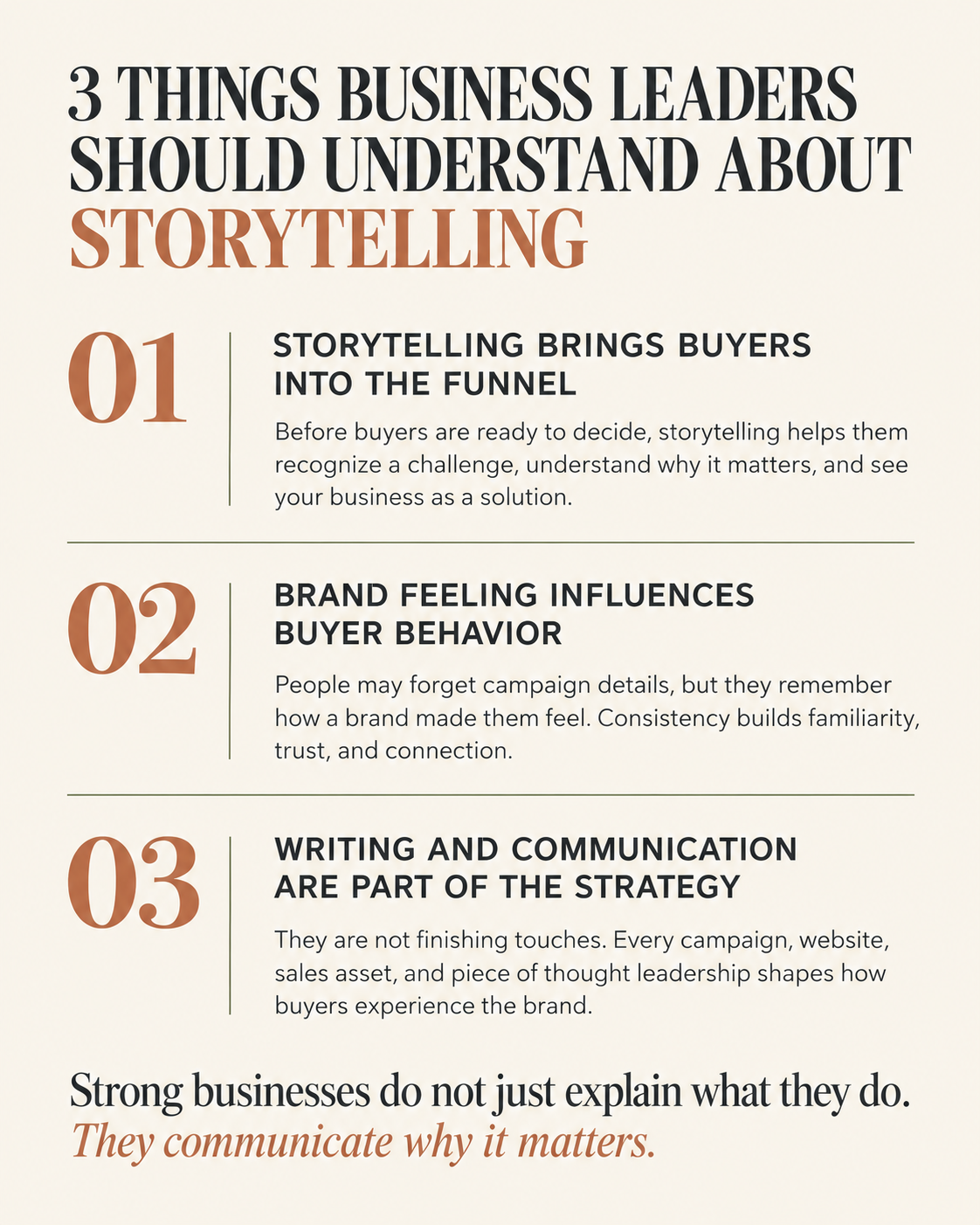
1. Help buyers recognize a need
Many potential customers are not ready to buy when they first encounter your brand. They may feel the friction of a problem without knowing what to call it or how to address it.
A useful story makes that problem concrete. Instead of opening with a list of consulting services, describe a growing team whose projects keep stalling because nobody knows who owns the next step. Then explain how your approach helps create clearer handoffs.
That gives the reader a way to recognize their own situation and a reason to explore your offer. Pair the story with an appropriate next step, such as reading a guide, reviewing a relevant case study, or starting a conversation.
2. Build a brand experience people can trust
People form impressions through more than a single campaign. Your tone, visual identity, clarity, and follow-through all contribute to how they experience your business.
A confident sales deck followed by a confusing proposal creates friction. Clear, consistent materials help buyers understand what to expect and assess whether your business is a good fit.
Consistency does not mean repeating the same headline everywhere. It means carrying the same promise, voice, and evidence across the website, email, presentation, and proposal while adapting each piece to its purpose.
3. Bring communication into the strategy early
Writing and design decisions affect what customers understand, what they question, and what they do next. Waiting until the end of a project to consider them can leave a strong offer difficult to explain.
Before creating the materials, agree on the audience, the business goal, the customer need, and the evidence that supports your message. Decide what action each piece should help the reader take.
For a proposal, this might mean connecting technical strengths to evaluation criteria. For a launch campaign, it could mean building a path from recognition on social media to a clear offer on the website and a focused inquiry.
Put the story to work
Review one material your business uses today. Can a customer quickly see the problem you help solve, why your approach matters, and what to do next? If those answers are unclear, start there.
At Resonate Creative Studio, I connect strategy, writing, design, and project coordination to help businesses turn expertise into compelling proposals and marketing materials.
Let’s shape a story that supports your next business opportunity.

Comments
Post a Comment